
Ah, jamón serrano, the Spanish delicacy that tells a story with every savory slice. It’s not just cured meat; it’s a cultural emblem and a taste of tradition. Every sliver of jamón serrano echoes with the history of Iberian artisans who’ve perfected the craft of cured meats over centuries.
From the hills of dehesa to the tables of the taberna, jamón serrano embodies the essence of Spanish culinary wanderlust, inviting you to savor its rich history and complex flavors with every bite. Of course, you might have a question or two about where exactly jamón serrano falls in the ham hierarchy — that’s what this article aims to answer.
Table of Contents
What is jamon serrano?
Jamon serrano rolls off the tongue like poetry, and that’s just the beginning of this culinary story. Spain’s gift to the ham-loving world doesn’t just tantalize the taste buds; it tells a tale of tradition, craftsmanship, and the land from which it hails. Whether draped over a crusty baguette, served with a slice of Spanish cheese, or paired with a glass of Rioja, Jamon Serrano is a taste of Spain’s soul—a celebration of everything that makes this country so special.
First things first: Jamón serrano is pork, cured to perfection. But this isn’t sliced supermarket ham that ends up in a sad sandwich.
Jamón serrano is the result of a meticulous process that starts with white Spanish pigs or breeds like Duroc, raised in the fresh air and sunshine of the Spanish countryside. Once the pigs have lived their best lives, it’s time for the magic to happen. The meat is trimmed and seasoned with just two other ingredients: Salt and time. This isn’t a process to rush; it’s a labor of love that requires patience and precision that can last up to two years.
After about two weeks of salt curing to draw off excess moisture and to prevent spoilage, the salt is washed off and the hams are hung to dry for roughly six months. After that, the hams are hung in drying sheds (secaderos), usually built at higher elevations, for six to 18 months, depending on the climate, and type of ham being cured. Serrano means from the sierra, or mountain range, which is why the ham is called “mountain ham.” Et voilà.
What sets Jamón serrano apart isn’t just the time it takes to make; it’s the terroir—the unique environmental factors that give it its distinct flavor. From the rugged mountains of Andalusia to the rolling hills of Catalonia, each region lends its own character to the final product. It’s like a taste of Spain in every bite—a journey through the sights, smells, and flavors of this vibrant country.

Jamon serrano vs iberico
Comparing jamón serrano to jamón ibérico isn’t quite like comparing apples to oranges; it’s more like 18k gold to 24k gold. Sure, they’re both Spanish cured meats, but any Spaniard worth their salt (and plenty of it) knows they’re not one and the same. Back in 2019, Prime Minister Pedro Sánchez found himself in a bit of a ham-fisted situation when he mixed up the two. That’s a cardinal sin in Spain.
Here’s the gist: Jamón serrano is the workhorse of Spanish ham, accounting for a whopping 90% of the country’s annual production. It’s like the reliable old friend you can always count on. Jamón serrano uses pigs of the Duroc, Pietrain, or Landrace breeds that chomp down on cereal grains from all corners of Spain until their time comes. A quick salt bath, a rinse-off, and then it’s off to the curing chamber for up to a year and a half.
Jamón ibérico, on the other hand, is a more finely tuned instrument. We’re talking about pigs with pedigree here—black Iberian pigs or their well-bred crossbred cousins, boasting at least 75% Ibérico blood. If you spot a black hoof on that ham stand, well, you’ve struck gold. It’s the mark of authenticity, a guarantee of top-notch flavor and quality. But here’s the kicker: jamón ibérico demands more time and attention. We’re talking a salting period of 2 to 4 years, and it has to hail from specific regions like Guijuelo, Los Pedroches, Dehesa de Extremadura, or Jabugo, according to those fancy denominaciones de origenes (DOPs).
While both delicious in their own right, jamón serrano and jamón ibérico each have their own stories to tell. Jamón serrano has a traditional specialty guaranteed (TSG), which is special enough, but jamón iberico holds the much more exacting and prestigious DOP.
And trust me, you don’t want to mix them up—especially not in Spain. That’s like bringing a hot dog to a ham fight.
Jamon serrano vs prosciutto
Jamón serrano and prosciutto di parma might seem like distant cousins, and that’s true to an extent. Much of the process is similar, but their origins and designations differ enough that they’re not entirely interchangeable.
Let’s start with jamón serrano. There aren’t many geographic restrictions for jamón serrano production, other than it has to be produced in Spain. That differs from jamón iberico, which can only come from one of four regions of western and southwestern Spain.
Prosciutto di parma requires hopping over to Italy—Langhirano specifically, nestled in the southern reaches of Emilia-Romagna. We’re talking about a specific sweet spot here—within a 5-kilometer radius and no higher than 900 meters above sea level. That’s where the artistry of prosciutto unfolds.
Process-wise, prosciutto typically takes from nine to 14 months, while jamón serrano ages 24 to 48 months. Prosciutto also ages in a more humid environment, which leads to a sweeter meat with and more supple texture. Jamón serrano thus has a deeper, more robust color and texture, and won’t always wrap around other foods so easily. Prosciutto, on the other hand, plays well with others—it’s the life of the party, especially when paired with something bold like melon on a hot summer day.
So, you see, while they might share some similarities, jamón serrano and prosciutto di parma each have their own distinct flavors, traditions, and tales to tell. And that’s what makes them so special—like Italy and Spain themselves, two distinct worlds with a shared love for great food.
Jamon serrano leg
If you’re having a big enough party, or really just love ham, consider buying an entire leg of jamón serrano. A full leg will weigh somewhere around 9 to 19 pounds (6 to 9 kilos), and many vendors will sell the leg with a stand to aid with slicing. Don’t worry about not being an expert carver; slice thin and watch out for bones and you’ll look like a culinary genius.
You’ve also got the option between the typical hind leg and front leg, known as the paleta or paletilla. The jamón comes from the hind legs, the powerhouse muscles that carry the weight of the pig’s swagger. The paleta comes from the front legs, the shoulders, where the pig carries its strength and character.
Why does it matter? Well, it’s more than just where it comes from; it’s about what that means for the final product. The location on the pig contributes to everything from weight to fat content. The paleta will yield a lesser percentage of meat than the jamón and will be fattier. It’ll also be a bit less expensive; for example, you can buy a paleta from Fermin for under $200 on Amazon.
The jamón, with its back-leg origin, will be larger and rounder, weighing between 14 and 19 pounds, with that coveted marbling running throughout. Meanwhile, the paleta, from the front legs, typically weighs between 9 and 12 pounds and will appear more elongated and thin. It brings its own unique flavors and textures — a bit more compact but no less delicious.
Noel jamon serrano
Thanks to a few regulation changes in the 2000s, jamón serrano is a far more common foodstuff in American grocery stores. There’s a decent chance you’ll find it in a well-sourced supermarket or your local specialty store. But even if you don’t, you can order a full leg from Noel USA from Costco, for example.
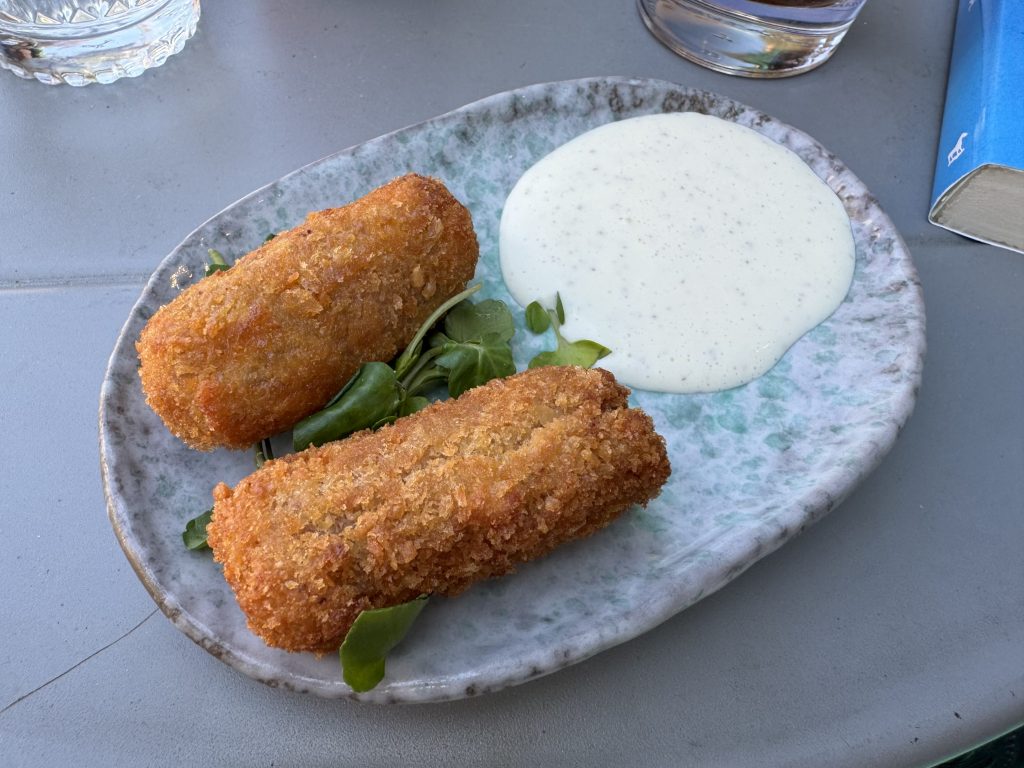
Croquetas de jamon serrano
If you’re in a Spanish bar or restaurant and you see croquetas de jamón serrano available, do yourself a favor and order a plate. Few Spanish snacks hit the spot quite like croquetas de jamón serrano. Alternatively, if you’ve got an hour and a half and an appetite, every abuela has her recipe, but most follow the same basic pattern: olive oil, butter, flour, milk and ham.
Are croquetas good for you? Absolutely not. Are they delicious? Absolutely. Here’s a great recipe from Spanish Sabores.