
Any time I’m planning a trip, I run into one of the challenges of choosing the best cities to visit in Spain: There’s simply so much history, beauty and charm around the country that inevitably some wonderful Spanish place ends up snubbed.
Far be it from me to determine ~the best~ place to visit in Spain, as some people love the beach, some people love the mountains, and some people love the countryside. Not only that, but the language, food and weather vary from region to region. From Madrid’s cosmopolitan streets to Granada’s majestic palaces, every region has something to offer, except Extremadura (I kid; it’s a joke because most of the Spanish Empire’s explorers came from Extremadura and left because there were no opportunities for them in the 15th Century).
All that said, I’ve spent enough time traveling around Spain and as a travel editor to have opinions. You may not agree with them, but these are my choices.
Barcelona
Nearly 10 million people visited Barcelona in 2022 — and those numbers will only climb in subsequent years. Known for the architecture of Antoni Gaudí, vibrant culture, and cosmopolitan feel, Barcelona offers a buzzy blend of history and modernity. Visitors can explore iconic landmarks like Sagrada Família, Park Güell, and Camp Nou, the home to FC Barcelona, but you need more than a week to really feel the Catalan vibes. Positioned between the mountains and the sea, Barcelona defines a Mediterranean climate. Hot take: The beaches are pretty mid for a variety of reasons.
Prior to 1992, a lot of Barcelon’s seaside property was used for shipping and industry. The Olympics brought the Passeig Marítim and a facelift to El Poblenou, but nowadays, the bigger problem is how many tourists frequent the beaches. Even so, the heady mix of Catalan and Spanish, Modernism and contemporary architecture, global and domestic, all tally up for a city you need more than a lifetime to explore in full.
Madrid
Madrid was my first love; well, after this girl I went to high school with who didn’t feel the same way about me. I never had that problem with Madrid: As the capital of the country, Madrid boasts world-class museums like the Prado and Reina Sofía, stunning architecture in its historic neighborhoods, and an insane nightlife scene centered around Plaza Mayor and Gran Vía. Few moments in Spain compare to a Saturday night out in El Barrio de las Letras or hearing the roar of the crowd at the Santiago Bernabeu, the home of Real Madrid.
Barcelona get the lion’s share of the attention from the international crowd, but if it had access to the sea, Madrid would be damn near perfect (for me) as a vacation destination. Just note it’s sweltering in the summer months — no amount of cañas can save you.
Seville
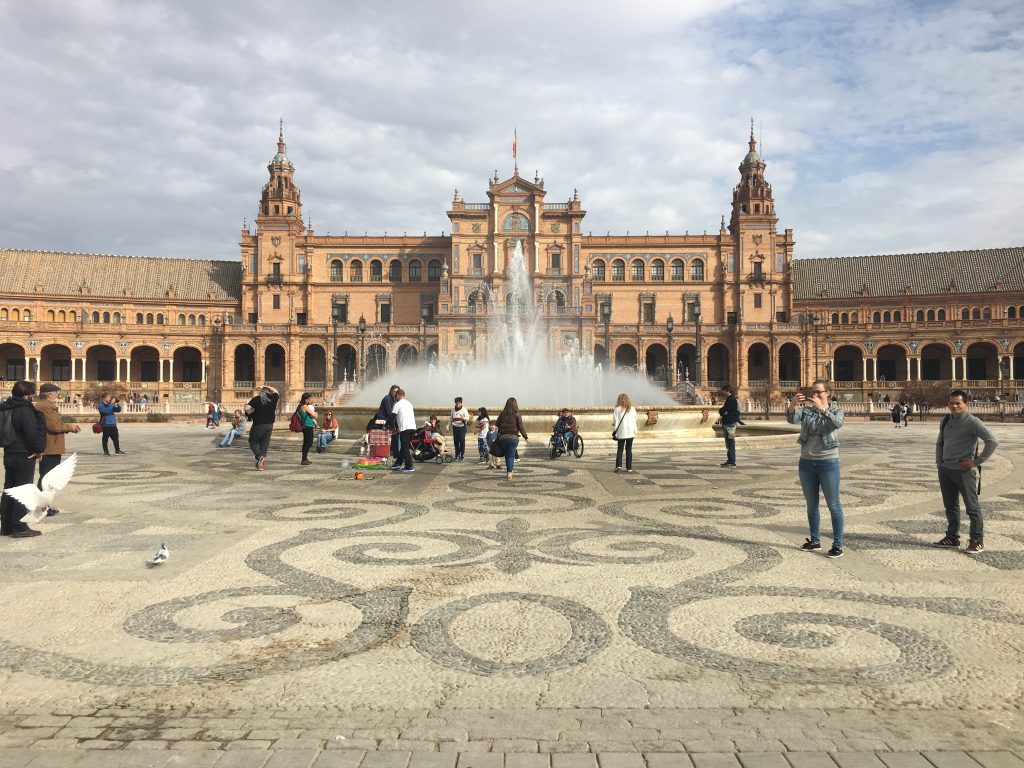
Sevilla has had perhaps the greatest glow-up of any Spanish city in the 21st Century; the addition of a metro system to the already super-functional trams and buses, combined with the warm climate, make Seville an excellent city to visit — outside the summer months, of course. If you enjoy melting like a lit candle, by all means, visit Seville in the summer. Broiling heat aside, the city’s rich Moorish heritage enchants visitors with its stunning Alcázar, grand Cathedral, and Torre del Oro. You’ve never experienced tapas until you’ve spent an evening strolling around the vibrant neighborhoods of Santa Cruz and Triana. As an American, I envisioned Seville in my mind’s eye as the most typically Spanish place before I visited the country. Even after living in the country and visiting dozens of cities, I still feel that way.
Granada
The Alhambra looms over the Granada, both physically and spiritually, and a morning or afternoon spent touring the palace and poring over the details, like the poetry inscribed into the walls, is time well spent. Built primarily between the 13th and 14th centuries, La Alhambra epitomizes the captivating blend of Islamic and Spanish culture in Granada. You’ll still experience plenty of fellow foreign visitors in Granada, but because it’s a smaller city, it feels more walkable in every way, and life moves at a slower pace, even compared to other Spanish cities. Visitors can wander through the charming Albaicín quarter and enjoy breathtaking views of the Sierra Nevada mountains. If you’re into skiing, Granada makes for a great base, too.
Valencia
Valencia might not get the attention of Barcelona or Madrid, but that’s great for visitors, and even better for residents. I’ve considered moving to Valencia more than once, simply because of how well the city functions, its size, and the relatively cheap cost of living compared to the big two. Valencia enjoys a wonderful climate along the Mediterranean and doesn’t suffer from the sweltering heat quite so much as southern Spain, either. Residents speak valencià, the regional version of Catalan, and arròs negre (arroz negro), or black rice, looks intimidating, but tastes delicious; it’s similar to paella, except includes squid cooked in its ink, which gives the black color. Famous for its futuristic City of Arts and Sciences complex, Valencia also boasts a beautiful historic center, vibrant food scene, and stunning beaches along the Med coast.
San Sebastián
I sometimes feel embarrassed for not having spent more time in San Sebastián, but así es la vida. My first trip didn’t include a swim in the Bay of Biscay from La Concha beach — routinely voted as the best beach in all of Spain — because despite my visit occurring in July, it rained the entire four days I was there. Nevertheless, the Basque wonder is renowned for its picturesque bay, world-class cuisine, and lively atmosphere. Visitors can indulge in pintxos (Basque tapas) in the Old Town and relax on the postcard-perfect La Concha beach. Note that even if you speak Castilian Spanish, you won’t have a clue what people are saying in Basque; signs will be in both languages, but nobody really knows the origins of Basque, as it’s not a Romance language.
Córdoba
Andalucia probably doesn’t get as much attention as it deserves, and that’s never more true than in Córdoba. Home to the magnificent Mosque-Cathedral, Córdoba offers a fascinating glimpse into Southern Spain’s Islamic past. Visitors can wander through the charming streets of the Jewish Quarter and explore the flower-filled patios during the aptly named Festival of Patios.
Toledo
Toledo makes for a wonderful day trip from Madrid, or even a long weekend if you’re staying longer. A UNESCO World Heritage Site, the historic city is best known for its medieval architecture, ancient synagogues, and Gothic cathedral. Visitors can stroll through the narrow streets of the old town and marvel at its rich cultural heritage. And if you’re a history or literature buff, Toledo’s connection with Miguel de Cervantes and Don Quixote will scratch those itches; Quixote began his journey in Toledo, and you can find a monument to Spain’s most important author in the There’s also a surprising amount of artwork by El Greco worth seeing, and it’s a great place to buy a Zamorano sword as a souvenir — assuming you’re in the market for a sword.
Bilbao
Spain has a lot of incredible architecture, but the single coolest building in the country resides in Bilbao: The iconic Guggenheim Museum Bilbao. My favorite exhibit I’ve seen was a bunch of furniture by Dalí back in 2008, but it always has interesting works, including the permanent installation from Richard Serra. The industrial city in the Basque Country offers a dynamic cultural scene, delicious cuisine, and charming riverside walks along the Nervión River. I liken it to Pittsburgh with better food, better culture and better weather — and I like Pittsburgh!
Málaga
Málaga is more of a deep cut for American visitors to Spain, as in all likelihood, you’ll seek out the bigger cities first and want to experience more of the country’s history elsewhere. Don’t sleep on Málaga. Situated on the Costa del Sol, Málaga is not only a gateway to beautiful beaches but also boasts a rich history, with attractions such as the Alcazaba fortress, Picasso Museum, and lively tapas bars in the historic center. My favorite doner kebab I’ve eaten in Spain — not an official cuisine — was in Málaga. It had dates in it, which threw my tastebuds for a loop. The sand on the beaches isn’t the best, but given the weather, ease of transportation and relatively low costs, Málaga makes for a wonderful spot to spend a few days because it combines history, beaches, and Southern Spanish culture.