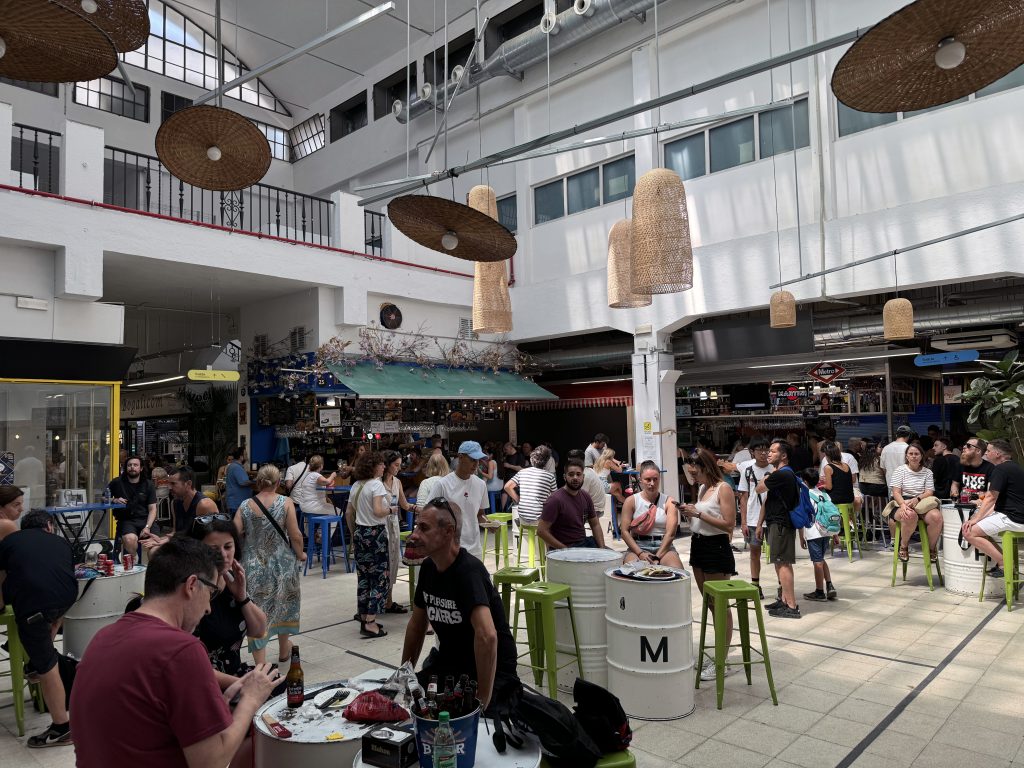
About 10 years ago, my friends Luis and Kristin took me to Mercado de San Fernando for the first time. Madrid—and Spain in general—has been dotted with traditional markets for decades. In times past, housewives typically did the family shopping at these markets, where milk, pan integral and produce were on the shopping list, and the market often stayed open only until la comida around 2:30 p.m.
The real treat, though, was finding local products you may not find elsewhere; I used to live near Mercado municipal de Maravillas, where I’d frequently buy fresh poultry and artisan pickles that were cheaper and so much better quality than anything you’d find in a supermarket for non-artisan prices. That’s not to mention that Maravillas allegedly got the best seafood in all of Spain—part of the running joke that Madrid had the country’s best coastline because the best seafood was always shipped there.
The transformation of Madrid’s traditional markets
But as women fortunately gained further independence, and major supermarkets unfortunately took greater presence in daily Madrileño life, Spain’s traditional markets have fallen into steady decline. Fewer young people choose to shop at these traditional markets, instead opting for chain supermarkets like Mercadona, Carrefour and Día.
A transformation began in the mid-2000s, however, that breathed new life into the traditional markets. Rather than just selling foodstuffs, the markets slowly began turning into social dining halls. Spaniards very much treat meals as an opportunity to socialize, and never is that more present than in an open-air food hall—particularly Mercado de San Fernando.
While the upscale Mercado de San Miguel and Mercado San Antón get more foot traffic and attention, in part due to their central locations, they differ in that they cater more to tourists than Mercado de San Fernando. San Fernando is in the fringes of Lavapiés—Madrid’s fringest neighborhood in the city center, populated heavily with immigrant communities. I recommend checking out what Madrid No Frills has to say about the neighborhood and it’s changing realities.
Food at Mercado de San Fernando
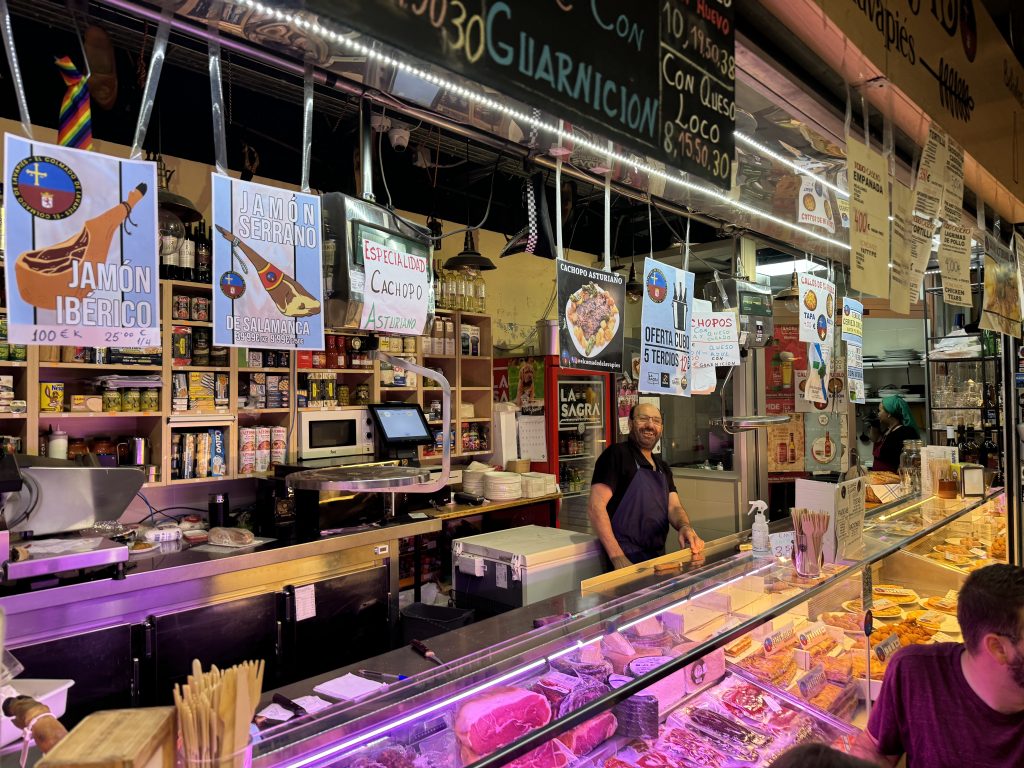
Regardless, Mercado de San Fernando has a less polished look and feel, but that doesn’t detract from its quality. The variety and quality of the food offerings there has kept me coming back for a decade. It’s not fancy, to be sure, but part of Spain’s charm, in my opinion, is the quality of unpretentious food everwhere. An empanada that might cost you $10 a serving in New York City costs maybe half that in a corner bar. I can’t overstate how much I love this aspect of Spanish life.
To that end, Mercado de San Fernando has tons about 25 different stalls with food from all around Spain and related countries; there’s Galician cuisine at el El Colmado de Lavapiés, Portuguese food at Mercadillo Lisboa and Asturian grub at El Guaje de Lavapiés. That’s just a brief sampling, but there’s ample seating and space around the hall to sip a vermouth, nibble on Spanish cheese or jamón ibérico, or sample wines from around Spain during a lazy afternoon.
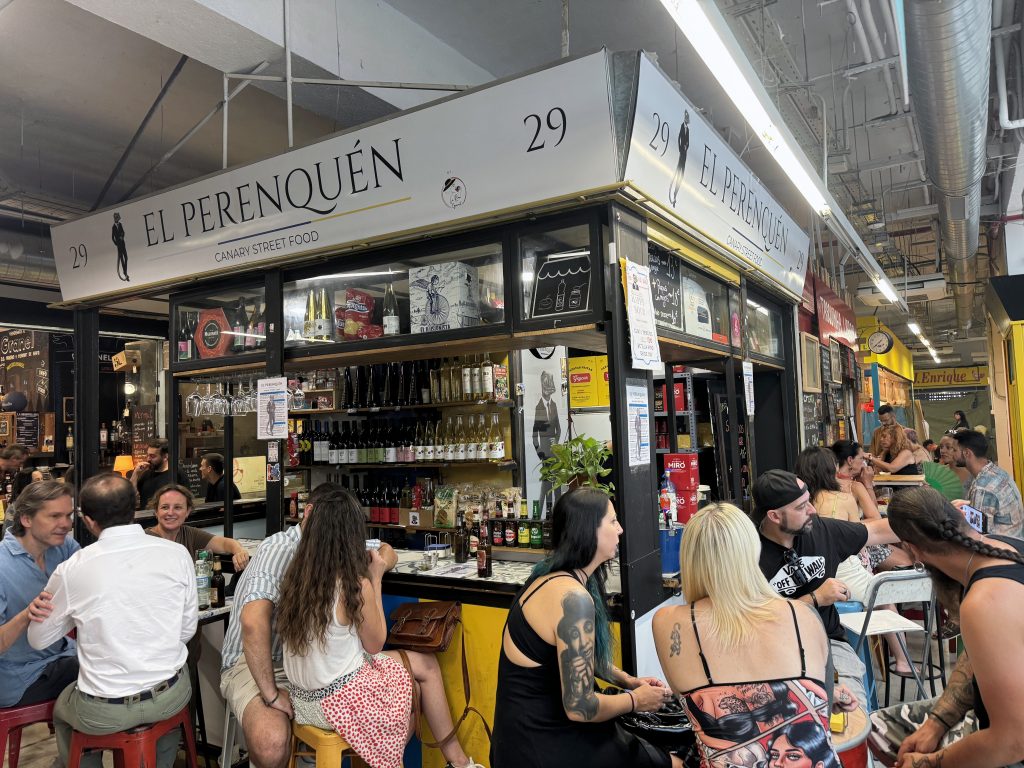
To me, there’s no better place to spend an hour or two with friends en la hora del tapeo—the hour for tapas. There’s something for everybody in Mercado San Fernando: Vegan food, rice dishes, pizza, tacos, and the gamut of Spanish food.
It’s nothing fancy, but that’s the point: It’s unpretentiously Spanish, and that’s why Mercado de San Fernando.