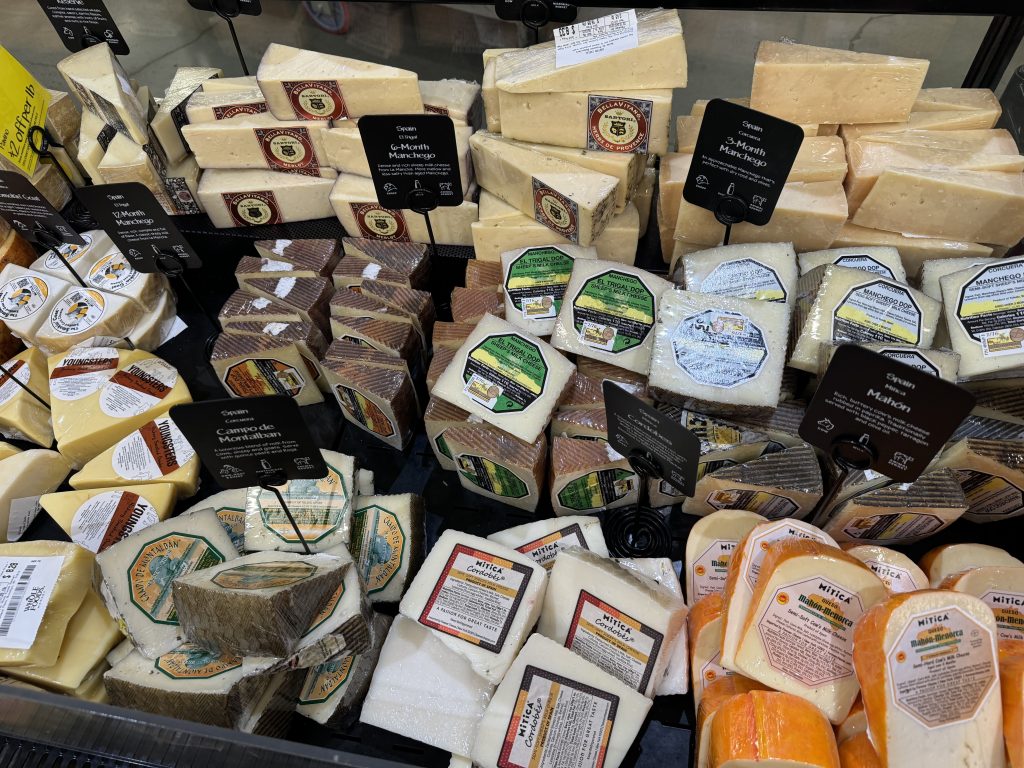
France and Italy earn the most attention worldwide for their variety of cheeses, but Spanish cheese has just as much going for it as any neighboring dairy scene. Just one nibble and Spanish cheese can instantly transport you to memories of sun-soaked patios, the sounds of the Mediterranean splashing, and the buzz of a late-night crowd in a public plaza. Those are the backdrops for some of the finest cheeses you’ll ever taste.
Take queso manchego, for example. Crafted from the milk of tough-as-nails Manchega sheep, this cheese has this nutty flavor, a hint of sweetness, and a texture that’s both creamy and crumbly. No wonder it’s a Spanish classic.
But it doesn’t stop there. There’s Tetilla, with its smooth, buttery goodness straight from the green pastures of Galicia. And then there’s Cabrales, a blue cheese that’ll make your taste buds stand at attention, born from the rugged mountains of Asturias. Culinaria Spain lists
Whether you’re a cheese aficionado or just a hungry traveler looking for your next flavor adventure, Spain’s got you covered. This list isn’t exhaustive — there are dozens of varieties of cheese in Spain, according to Culinaria — but it’ll cover the most popular cheeses, including ones you’ll find in the United States. So grab a hunk of cheese, pour yourself a glass of wine, and let’s dive headfirst into the delicious world of Spanish cheese.
Table of Contents
Manchego cheese
Queso manchego (Manchego cheese) — there’s a cheese fit for royalty. In the vast expanses of the La Mancha region, tough Manchega sheep roam freely, producing some of the finest milk known to cheese-kind. And Manchego doesn’t mess around — it’s got its own Denominación de Origen Protegida (DOP), a stamp of approval that says, “Yep, this cheese is as good as it gets.”
As for the cheese itself: You’ve got your young, creamy Manchego, with a buttery texture that practically melts in your mouth. But don’t sleep on aged Manchego: Firm, savory, and packed with umami goodness—it’s controlled flavor explosion in every bite.
That spectrum of flavors your Fresco, your Semicurado, your Curado, and your Viejo — each one offering an increasingly complex twist on this Spanish classic.
Iberico cheese
Hailing from the La Mancha region, Iberico cheese is a blend of sheep’s, goat’s, and cow’s milk, giving it a complexity that’s hard to beat. In Spain, they call it “Queso Iberico,” which translates to “Iberian cheese,” and it serves as a great representative of the diary scene on the peninsula.
The blend of sheep’s, goat’s, and cow’s milk creates a symphony of flavors, each milk bringing its own unique touch to the table, with the cheese often aged 12 months or more.
The cow’s milk adds a hint of acidity and a subtle tang to the mix. The sheep’s milk brings richness and butteriness that makes every bite decadent. And lastly, the goat’s milk adds a barnyard taste and complexity that keeps you coming back for more.
You might see Iberico compared to Manchego, another cheese from the same neck of the woods. But here’s the kicker — Ibérico is usually easier on the wallet.
Next time you’re savoring a piece of Iberico cheese, take a moment to appreciate the harmony of flavors at play. It’s a cheese that’s as complex as it is delicious — a true masterpiece of Spanish culinary craftsmanship.
Cabrales cheese
Cabrales — the heavyweight of Spanish blue cheese. Pungent, salty, and a bit stinky, Cabrales isn’t love at first bite for everyone. But here’s the thing — it’s an authentic delicacy that’s worth a shot, and if you enjoy blue cheese, it’s incredible.
Cabrales hails from Asturias, up north on Spain’s wild Atlantic shores. Crafted from a blend of cow, goat, or sheep’s milk, this cheese is always unpasteurized and inoculated with a special fungus that gives it those signature greenish-blue spots.
Here’s where it gets interesting: Producers age Cabrales in natural caves, letting it develop an intense flavor and an aroma that you can nearly smell a room away. Not everyone’s a fan of that stinky blue cheese life, but to me, it’s a must on any Spanish cheese platter.
Mahon cheese
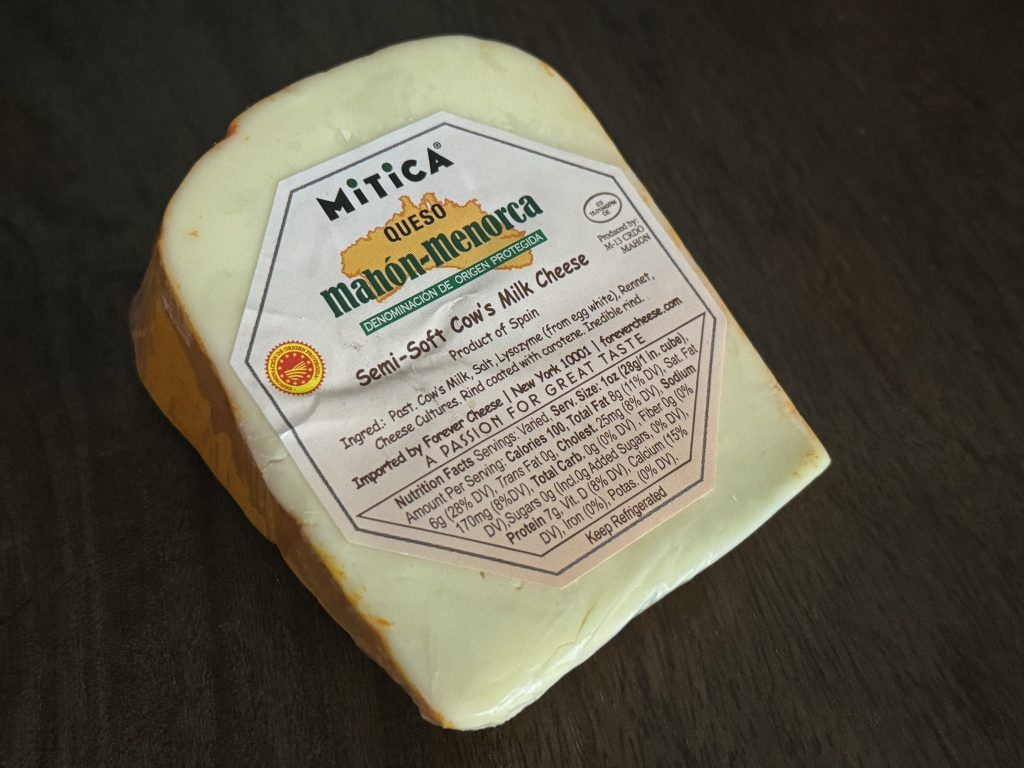
Let’s talk about Mahón cheese — a gem from the Mediterranean’s Balearic Islands, particularly Menorca. This cheese has a story and history that go back thousands of years: Ancient methods, generations of cheese-makers working their magic, and the result? A cow’s-milk cheese that’s not just a culinary delight, but a testament to tradition and craftsmanship.
When you lay eyes on Mahon, you’ll notice its rugged, yellow exterior, and maybe a few holes peeking through — each one telling a story of its own. But it’s the flavor that seals the deal. Savory, salty, with a hint of spice — this cheese is a flavor parade waiting to happen.
Next time you’re craving a taste of the Mediterranean, reach for a slice of Mahon.
Tetilla cheese
This cone-shaped cheese earns its peculiar name from its appearance: In Spanish, teta means “tit,” and tetilla means “small tit.” Thus the name.
Hailing from Galicia, the “Green Corner of Spain,” Tetilla is a specialty cheese crafted from cow’s milk, often aged for a mere 7 to 30 days. This ensures the cheese retains a milky, creamy texture while boasting a refreshing, slightly acidic flavor. With a history stretching back more than 2,000 years in the region, Tetilla has earned its status as a legend of Spanish cheese-making.
Whether enjoyed on its own, spread generously on toast, or incorporated into desserts, Tetilla showcases its versatility with grace. This cheese epitomizes freshness and offers endless culinary possibilities.
Roncal cheese
Roncal is like a cousin of Manchego and Idiazábal, but with a unique flair. Crafted from sheep’s milk and aged to perfection, Roncal hails from the rugged beauty of the Roncal Valley in Navarra. At this point, you’ve likely noticed: A lot of the best Spanish cheese comes from the north of the country.
That’s because of northern Spain’s dairy industry: The milk used in Roncal is top-notch. That’s why this cheese has its own Denominación de Origen Protegida, a stamp of approval that says, “You’ll love this cheese, whether you’ve had it before or not.”
When you lay eyes on Roncal cheese, you’ll notice its cylindrical shape, its golden hue, and its unmistakable hard crust. But it’s the taste that seals the deal — a bold, flavorful profile with just the right amount of bite.
Idiazabal cheese
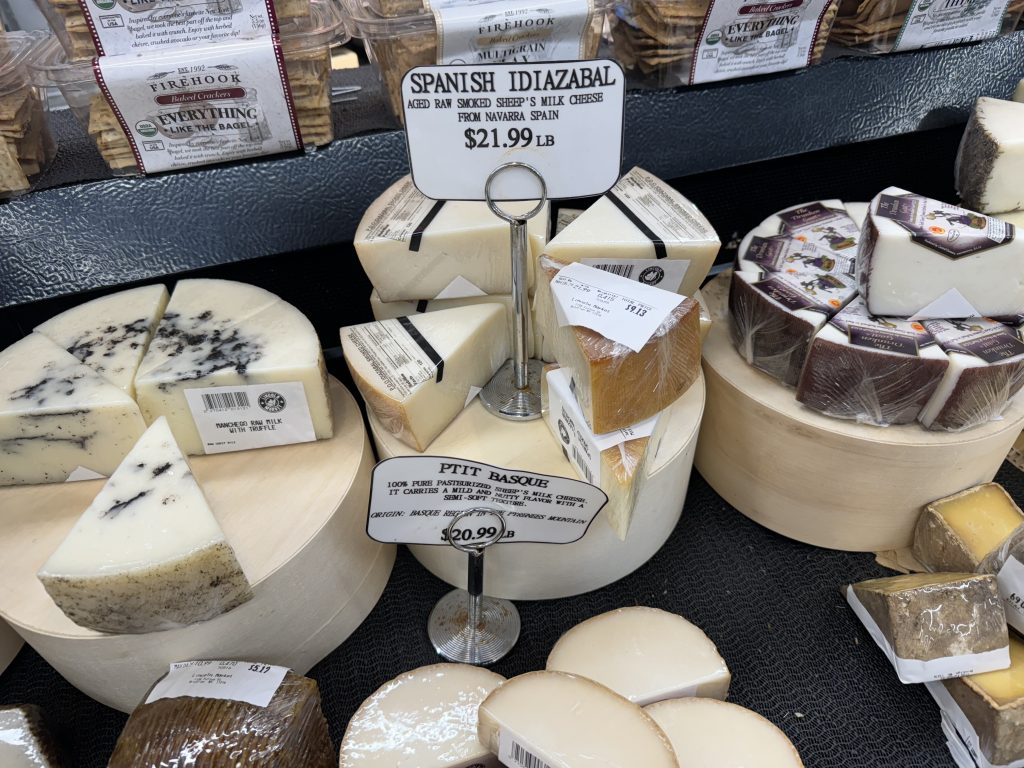
This slice of dairy heaven comes from the Basque Country and Navarre in Northern Spain and has been crowned the “Best European Cheese made with Sheep Milk.” To be honest, it’s earned every bit of that title. It’s nutty, it’s buttery, and sometimes — just sometimes — it’s got a smoky character that adds a wonderful depth. After a few glasses of wine, it’s like a flavor explosion in your mouth.
Now, when it comes to cheese boards, Idiazabal is your best friend. It’s versatile, it’s delicious, and it pairs perfectly with everything from briny olives to sweet compotes. Spice up your next charcuterie platter — grab Idiazabal if and when you see it.
Payoyo cheese
Payoyo is the local secret straight outta Andalucía, deep in the heart of southern Spain. It uses a blend of milk from Payoyo goats — hence the name — and Merina grazalemeña sheep to craft a culinary masterpiece. Payoyo is the demonym for Villaluenga del Rosario, the birthplace of the namesake cheese, and it’s a relatively young product compared to other Spanish cheeses, only officially beginning production in 1997.
And the taste? It’s creamy, not crumbly, like butter melting on your tongue, with subtle hints of nuts and spices dancing around. Once you’ve had a taste, you’ll never forget it, and you’ll find it in any Spanish delicatessen.
Payoyo cheese comes in a variety of shapes and sizes, too: Fresh, semi-cured, cured — you name it, they’ve got it. And if you really wanna take it to the next level, try some infused Payoyo. This aged sheep cheese, adds the earthy, intoxicating aroma of truffles. It’s a deep, umami flavor of Iberia unlike anything else you’ll find in Spain.
Majorero cheese
A specialty of the Canary Islands, Majorero cheese has been protected by law since 1996.
What makes Majorero cheese so special: Producers craft Majorero using milk from a local breed of goats, with just a touch — up to 15% — of sheep’s milk for good measure. This results in a cylindrical wheel with a firm, rustic crust, that protests a smooth, silky paste inside that’s downright irresistible.
Here’s where it gets even more intriguing. Cheesemakers use tropical palm leaves to wrap Majorero up tight as it ages, infusing it with a taste of the islands. And as if that wasn’t enough, they often give the crust extra love, rubbing it with paprika and olive oil, which add spice and richness.
Now, when you take a bite of Majorero cheese, you’re in for a journey of flavors. It’s mild, yet creamy, with a delightful hint of spiciness that’ll take your taste buds on a trip.
Cheese from Spain takeaways
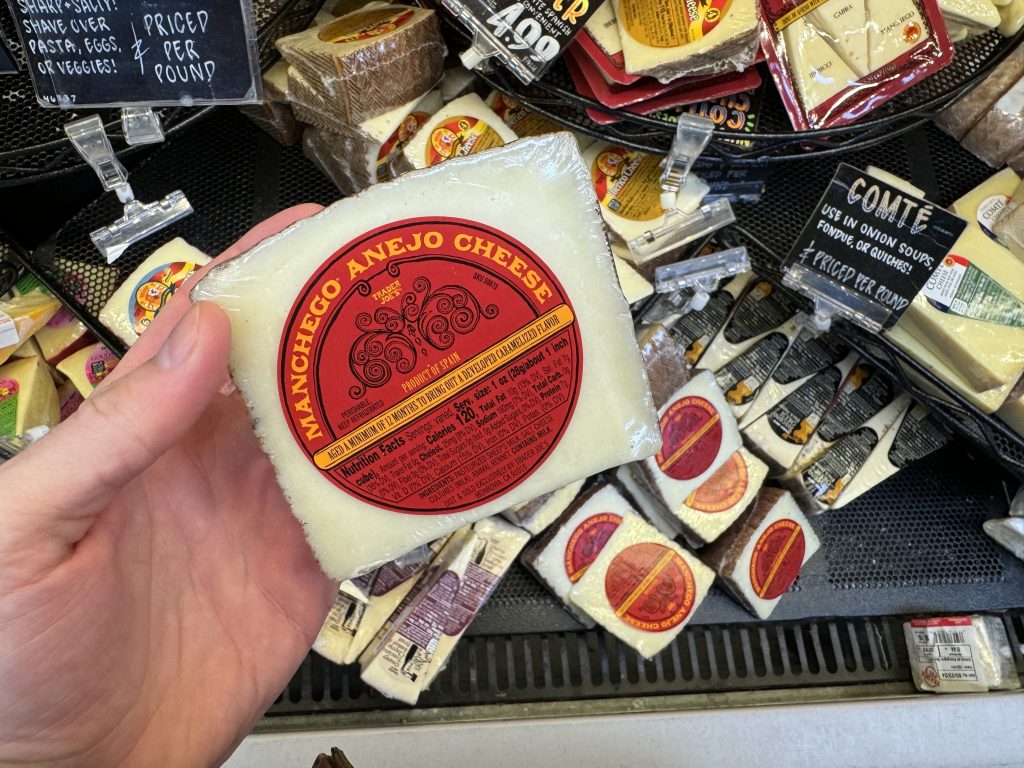
In all likelihood, you’ll be able to find queso manchego, queso ibérico, and maybe even mahón if you live in a bigger city or have a Whole Foods or import store nearby in the U.S. But there’s a whole world of other Spanish cheeses to try, and each brings something different to the charcuterie board. Do yourself a favor the next time you’re in Spain: Branch out and try the local cheese, wherever you are. You never know when you might find a new favorite.