Southern Spain Itinerary: The Complete Andalusia Guide
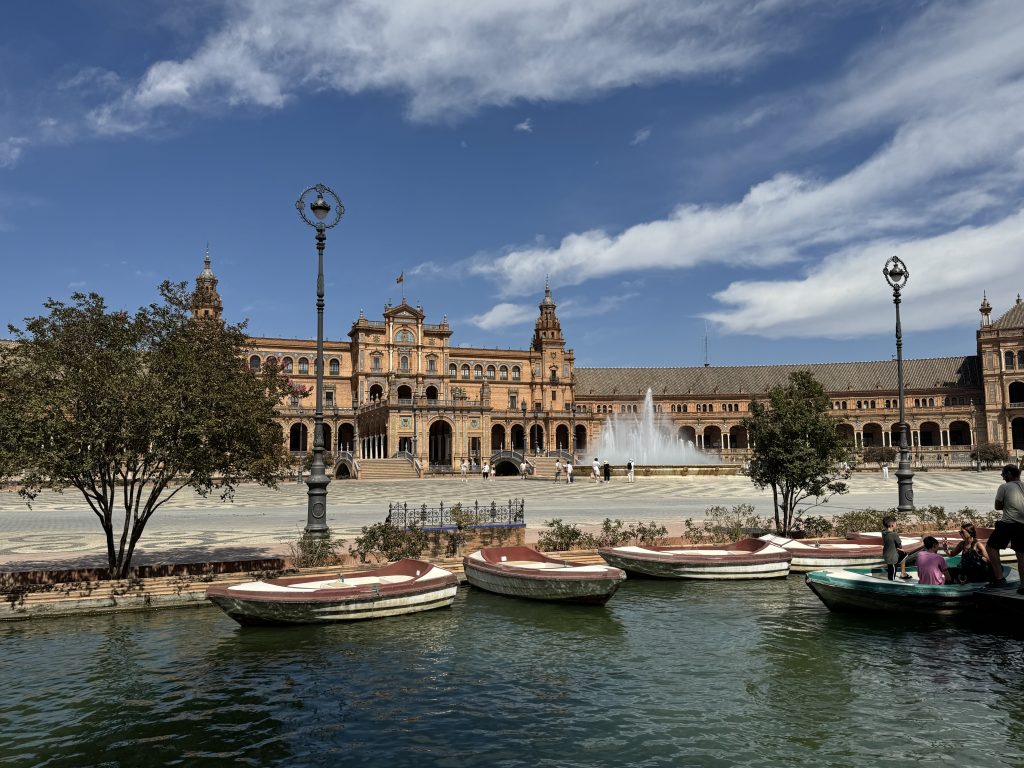
I’ll be honest: I’ve been putting off writing a guide like this because trying to do Andalusia justice in one trip, let alone one article, is like trying to summarize all of Martin Scorsese’s movies in a paragraph. You can talk about favorites, but invariably, you’ll skip something incredible. There’s simply no “perfect” southern Spain itinerary.
That said, I’ve spent enough time in Andalusia to have opinions worth sharing.
This is the guide I wish I’d had when I first started planning a trip down south. It covers the essential stops, how long to spend at each, and how to structure a southern Spain itinerary, whether you have a week, 10 days, or a languorous 2 weeks to play with. It’ll also cover when to go, how to get around and a handful of practical notes based on my first-hand experience.
Let’s get into it.
What makes southern Spain different
While Spain is roughly 75% as big as Texas — bigger than most people realize — the north and south might as well be different countries in terms of culture, food and language. Andalusia is what most people picture when the envision Spain in their mind’s eye: Flamenco dancers, Moorish palaces, bone-dry heat, sherry on a patio and tiptoeing through midday shadows down narrow alleys.
The region occupies the entire southern strip of the Iberian Peninsula, from the Portuguese border in the west to the coastal province of Almería in the east. It’s Spain’s largest region, and its most visited. There’s a reason for that.
Andalusia’s history sets it apart from the rest of Spain: For nearly 800 years, Moors ruled this region, and their architectural legacy — the Alhambra in Granada, the Mezquita in Córdoba, the Alcázar in Seville — is unlike anything else in Europe. These aren’t ruins, either; they’re some of the best-preserved medieval monuments in the world, and standing inside them, you’ll have a hard time believing you’re still in the 21st century (assuming you can put your phone in your pocket for a few minutes).
Pair that with flamenco, Iberian ham that costs more per kilo than some illicit drugs, and the loud, expressive warmth that Andalusians show, and you have a region that rewards slow, attentive travel more than almost anywhere else in the peninsula.
How long do you need in southern Spain?
Honestly? Longer than you think. The main cities span a region roughly the size of Portugal, and the combination of heat (in summer), siestas and a general cultural resistance to rushing (mañana) means that Andalusia has a way of eating your schedule faster than you can gobble croquetas.
Here’s a realistic estimation, since most Americans don’t have weeks upon weeks to travel.
7 days in southern Spain
A week in southern Spain is enough to see the three heavy hitters — Seville, Córdoba, and Granada — without feeling like you’re sprinting from place to place. You won’t get to the coast, the white villages, or Ronda, but you’ll come home with a genuine feel of the region. For first-timers, this is the minimum I’d recommend.
10 days in southern Spain
Ten days is the sweet spot. You can see the sights in Seville, Córdoba, and Granada properly, toss in a night in Ronda, and still have a few days to laze about by the sea in Nerja or Málaga. This is the length I’d suggest for most people.
14 days in southern Spain
Two weeks gives you room to breathe. You can work in the pueblos blancos (white villages), spend more time on the Costa de la Luz, and approach the whole thing with a slow-travel mindset, rather than a logistics puzzle. If you’re considering the region as a potential place to live — which, given you’re on this site, you might be — two weeks is also a useful amount of time to actually feel what it’s like to be here rather than just see it.
Where to Go in Southern Spain: The Essential Stops
Seville
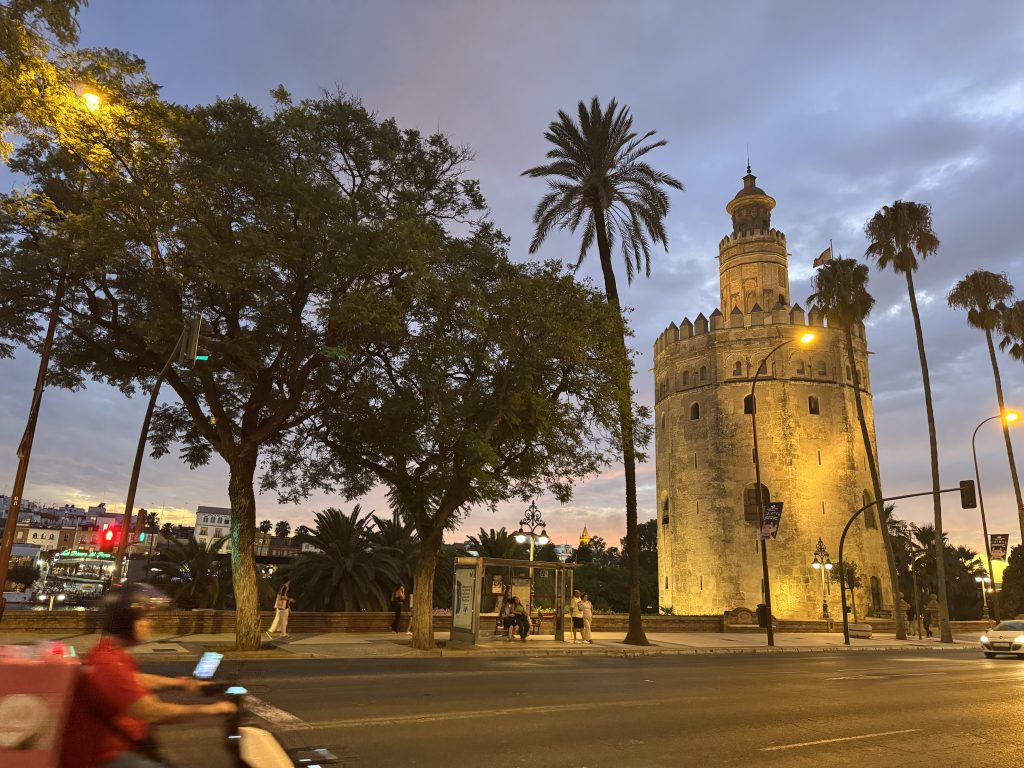
Depending on how recently I’ve visited, Seville is either my favorite city in Spain or the second best after Madrid. The ease of getting around Andalusia’s capital remains unparalleled for a city of its size: Metro, trams and buses make bopping from one place to another surprisingly easy.
The two non-negotiables are the Real Alcázar — a royal palace that’s been continuously occupied since the 10th century and contains some of the most extraordinary tilework, gardens, and Mudéjar architecture you’ll see anywhere — and the Seville Cathedral, the largest Gothic cathedral in the world, which also houses the tomb of Christopher Columbus. You’ll find both in the same compact area of the old city, though you’ll likely spend longer at each than you’d expect.
Beyond those tentpoles, Seville rewards wandering. The Barrio de Santa Cruz, the old Jewish quarter, is a labyrinth of white-walled alleyways and hidden plazas that’s at its best early in the morning before tour groups (and in the summer, the blazing midday sun) arrive. Triana, across the Guadalquivir river, is where Seville’s flamenco culture is most deeply rooted — and where you’ll find some of the best ceramic shops in the city. In 2025, I was lucky enough to be in Triana during the neighorhood festival, which was pretty special.
One honest note on flamenco: The tablaos (flamenco venues) in Seville vary in quality and price. It’s like any other tourist trap: The ones near the cathedral are largely geared toward foreigners with cash to burn. Do your research before booking.
- Time needed: 2–3 nights
- Skip if short on time: The bullring museum (Plaza de Toros) — interesting if you’re curious about the history of the corrida, but not essential
- Book in advance: Real Alcázar tickets; they sell out, especially on weekends
Córdoba
It’s easy to overlook Córdoba, but do so at your detriment: It’s quieter and less glamorous than Seville, and many visitors treat it as just a day trip just. After all, it’s only 40 minutes by train, and about 1:45 by car, and depending on when you visit, a day trip might be the right call.
The Mezquita-Catedral is the reason most people come, and it delivers. The building is an 8th-century mosque — one of the largest ever built — with a 16th-century cathedral constructed inside after Christians reconquered the city. You can only truly understand the resulting architectural collision by seeing it. Hundreds of red-and-white, candy-striped arches stretch in every direction, with a full baroque nave rising out of the middle. It shouldn’t work. It does.
The surrounding Jewish Quarter — the Judería — is worth a couple of hours of dawdling. In May, the city hosts the Festival de los Patios, when residents open their private courtyards for a competition judged on their flower arrangements. It sounds simple, but the displays are anything but.
- Time needed: 1–2 nights
- Skip if short on time: Alcázar de los Reyes Cristianos — significant historically, but lower visual impact than the Mezquita
- Book in advance: Mezquita tickets can be booked online; worth doing to skip the queue
Granada
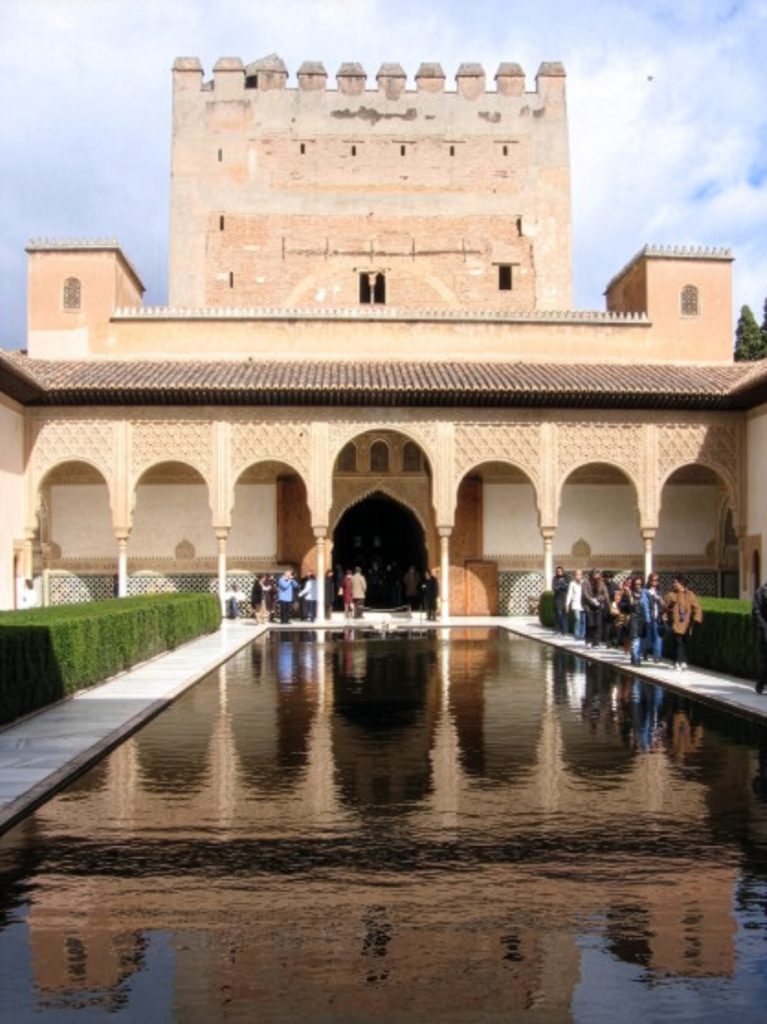
If Seville is Anadalusia’s beautiful face, Granada is its soul. Sitting at the foot of the Sierra Nevada, the Alhambra looms above Granada, and there’s something magical about the first time you see the palace during golden hour.
It goes without saying that the Alhambra is the reason you visit. A spectacular 13th-century Nasrid palace complex covering 35 acres, with gardens, a summer palace (the Generalife), and a level of decorative intricacy in the stone carving and tilework that makes you wonder what was happening in the rest of medieval Europe at the same time. (It was the plague. People were dying of the plague).
A critical note: Alhambra tickets sell out weeks in advance, particularly in spring and autumn. Not “might sell out.” They will sell out. Book before you finalize anything else about your trip. I’d suggest booking as soon as you know your travel dates — ideally 6 to 8 weeks out during peak season.
Below the Alhambra, the Moorish hillside Albaicín neighborhood features winding streets and whitewashed houses with views across to the palace. The Mirador de San Nicolás at sunset, with the Alhambra lit up across the valley, is exactly the view you’ve probably seen on Instagram, and thus, you’ll likely want to document on your Instagram.
Here’s the best part about Granada: Free tapas with drinks. While pintxo culture in northern Spain might have the rest of the world in a chokehold, southern Spain has it beat on sheer value. Order a beer or a glass of wine and the server brings you a small plate of food for no charge. This is not standard practice across Spain — it’s particular to Granada, and it’s god, I hope it never goes out of style. The first time I visited in 2006, I wondered if this was where I wanted to spend the rest of my life: With a small, cold beer, and a warm plate of croquetas.
- Time needed: 2–3 nights
- Skip if short on time: The science museum — fine for kids, surplus to requirements otherwise
- Book in advance: Alhambra tickets, minimum 4–6 weeks ahead.
Ronda

Chances are, you’ve seen Ronda in a photos somewhere. It’s Ronda not a place you’d necessarily visit on its own, but it earns its time on any itinerary of 10 days or more. The town is built on either side of a 300-foot-deep gorge in the mountains above Málaga, and the Puente Nuevo — the bridge connecting the two halves, completed in 1793 — looks like something you’d see in a Dalí painting.
It’s about 1.5 hours from Málaga by direct bus, or reachable by car from Seville in around 2 hours. As a day trip from either city it’s workable; as an overnight stop it’s better.
Ernest Hemingway and Orson Welles were both regulars here (Welles’ ashes are buried on a local estate). The bullfighting history is significant — the Plaza de Toros is one of the oldest in Spain — though like all things connected to that particular tradition, how much you engage with it is your own call.
- Time needed: 1 night, or a long day trip
- Skip if short on time: Ronda entirely — it’s a detour from the main Seville–Córdoba–Granada circuit, and a week isn’t long enough to fit it in comfortably
- Getting there: Car or direct bus from Málaga; no direct train
Málaga
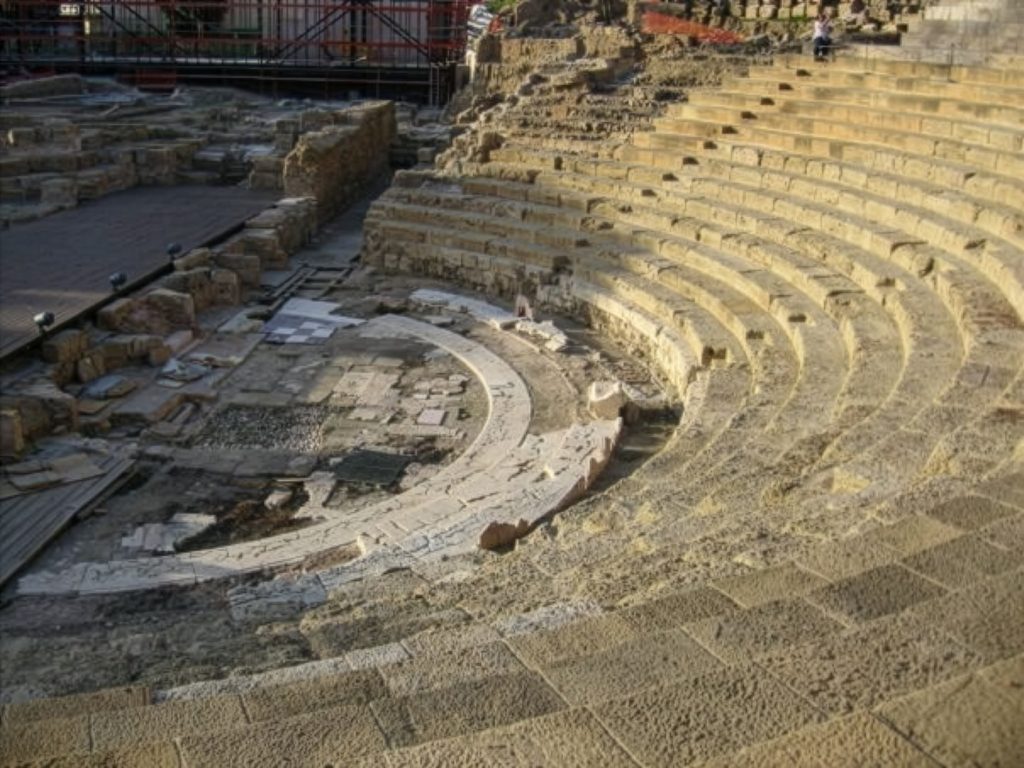
Málaga gets a bad reputation as a gateway city — somewhere you fly into and out of on the way to somewhere else. That reputation is increasingly unfair. It’s had a real cultural renaissance since the first time I visited, and there’s enough going on to justify a night or two. Just don’t go there for the beaches alone — I was surprised by the amount of driftwood and rocks compared to other shorelines along the Mediterranean.
The Picasso Museum is the obvious draw (he was born here), and it’s a solid collection, rather than a tourist obligation. Keep in mind, there are other Picasso museums in Barcelona and Paris; I’ve been to all three, and each has its charms. This one feels about right for the size of Malaga. The Soho neighbourhood has a strong street art scene. The old town, up around the Alcazaba, is worth a couple of hours.
It’s also a reasonable base for a day on the beach if you need to decompress after a week of monuments. The beaches directly in Málaga city are just OK; head east toward Nerja for better beaches.
- Time needed: 1–2 nights
- Skip if short on time: The castle at Gibralfaro — nice views, thin on content
The Coast
The Costa del Sol runs east from Málaga, and Nerja — about an hour’s away — is the platonic ideal of a coastal town: Less developed than the resort strips further west, with good beaches and the extraordinary Nerja Caves (stalactite formations that contain some of the oldest known cave paintings in Europe).
If you prefer a wilder, less touristed coastline, the Costa de la Luz on the Atlantic side — around Tarifa, Cádiz, and Vejer de la Frontera — is the better call. Tarifa is technically the southernmost point of mainland Europe and has a distinct, windswept character that’s different from the Mediterranean coast. It’s great for windsurfing and kitesurfing, and you can see across the strait of Gibraltar to Morocco.
The White Villages (Pueblos Blancos)
The pueblos blancos, or white villages, are a network of tiny hilltop towns between Ronda and the coast, so named for their whitewashed houses. Zahara de la Sierra, Grazalema, and Setenil de las Bodegas — where houses are built directly into a rocky cliff overhang — are the standouts.
Of course, you’ll need a car to visit these towns properly, but they make for a worthwhile daytrip from Ronda or Seville.
Sample Itineraries
7-Day Southern Spain Itinerary
| Day | Location | Highlights |
|---|---|---|
| 1 | Arrive Seville | Settle in, evening walk through Barrio de Santa Cruz |
| 2 | Seville | Real Alcázar (morning), cathedral, Triana neighbourhood |
| 3 | Seville → Córdoba | Travel mid-morning, Mezquita, Jewish Quarter |
| 4 | Córdoba → Granada | Travel afternoon, evening in Albaicín |
| 5 | Granada | Alhambra (pre-booked, morning slot), Generalife gardens |
| 6 | Granada | Albaicín, free tapas lunch, Mirador de San Nicolás at sunset |
| 7 | Depart Granada | Morning flight from Granada or Málaga (2hr drive) |
Logistics note: Córdoba sits directly on the high-speed rail line between Seville and Granada, making this an easy train trip with no need for a car.
10-Day Southern Spain Itinerary
| Day | Location | Highlights |
|---|---|---|
| 1 | Arrive Seville | Evening orientation walk |
| 2 | Seville | Real Alcázar, cathedral, Barrio de Santa Cruz |
| 3 | Seville | Triana, flamenco show, Plaza de España |
| 4 | Seville → Córdoba | Mezquita, Judería, evening in Córdoba |
| 5 | Córdoba → Ronda | Drive through mountains (~2.5 hrs), arrive Ronda |
| 6 | Ronda | Puente Nuevo, old town, optional pueblos blancos detour |
| 7 | Ronda → Granada | Drive or bus (~2.5 hrs) |
| 8 | Granada | Alhambra (pre-booked) |
| 9 | Granada | Albaicín, day trip to Sierra Nevada or Alpujarras villages |
| 10 | Depart | Fly from Granada or Málaga |
14-Day Southern Spain Itinerary
| Day | Location | Highlights |
|---|---|---|
| 1 | Arrive Seville | Evening in the old city |
| 2 | Seville | Alcázar, cathedral, Triana |
| 3 | Seville | Plaza de España, flamenco, slower pace |
| 4 | Day trip: Cádiz | Atlantic coast, one of Europe’s oldest cities |
| 5 | Seville → Córdoba | Mezquita, Jewish Quarter |
| 6 | Córdoba | Patios, slower exploration, evening in the old town |
| 7 | Córdoba → Ronda | Scenic drive, check in to Ronda |
| 8 | Ronda + Pueblos Blancos | Grazalema, Zahara, Setenil loop by car |
| 9 | Ronda → Málaga | Drive down to coast, Picasso Museum, Soho |
| 10 | Nerja | Beaches, Nerja Caves |
| 11 | Nerja → Granada | Coastal road drive, arrive Granada |
| 12 | Granada | Alhambra (morning) |
| 13 | Granada | Albaicín, free tapas, relaxed day |
| 14 | Depart | Fly from Granada or Málaga |
Getting Around Southern Spain
I am decidedly not a car person; I last owned a car in 2011, and have chosen to live in and visit places primarily by not needed to drive everywhere. That said, the answer in southern Spain isn’t as simple as “just take the train” or “just rent a car.”
By train
Renfe’s high-speed AVE trains are excellent, and the Seville–Córdoba–Málaga corridor is one of the best-served routes in the country. Just don’t try to use the WiFi — I made the mistake of thinking I could be productive on my last trip and gave up after 10 minutes.
Seville to Córdoba takes around 45 minutes. Córdoba to Granada takes about 1 hour 45 minutes. Trains are fast, comfortable and pretty cheap if you book ahead.
The limitation: Trains don’t cover Ronda (no direct service), the pueblos blancos, or most of the smaller coastal towns. But if you’re sticking to the classic Seville–Córdoba–Granada triangle and nothing else, skip car rental.
Book trains through Renfe or the Omio aggregator. Prices drop significantly with advance booking.
By car
For anything beyond the main cities — again, Ronda, the white villages, rural Andalusia, the Costa de la Luz — get a car. It gives you the freedom to stop at that village you spotted from the road, to leave cities at your own pace, and to reach places that public transportation simply wouldn’t allow.
The catch: Parking in Seville and Granada city centers is difficult and expensive. If you’re renting a car for part of the trip, I’d recommend picking it up after your city stays and using it for the mountain and coastal sections. There’s no point having a car sitting in a Seville underground garage at €25 a night.
By bus
ALSA operates intercity buses across Andalusia, and while they’re cheaper than trains, they’re slower, too. The bus from Seville to Ronda (around 2.5 hours) is the most practical way to get there without a car. For the main city connections, I’d take the train over the bus, but for reaching coastal and mountain towns, you’ll need to take a bus.
The verdict:
- 7 days, cities only: No car needed. Train between Seville, Córdoba, and Granada.
- 10 days including Ronda: Pick up a car in Córdoba or Seville for the Ronda leg, return it in Granada.
- 14 days including coast and villages: Rent a car from day 4 or 5 onward.
When to Visit Southern Spain
| Month | Temp (Seville) | Crowds | Verdict |
|---|---|---|---|
| January–February | 8–15°C | Low | Quiet, cheap, some rain — good for cities, cold for coast |
| March | 12–18°C | Low–Medium | Wildflowers, warming up, Semana Santa in late March (some years) |
| April | 15–22°C | Medium–High | Ideal. Warm, green, Semana Santa and Feria de Abril |
| May | 18–26°C | Medium | Ideal. Córdoba Patio Festival, perfect temperatures |
| June | 24–33°C | High | Getting hot in Seville/Córdoba; fine on the coast |
| July–August | 30–42°C | Very High | Seville averages 36°C in July. Doable — but demanding |
| September | 24–31°C | Medium | Crowds thin, heat easing — excellent month |
| October | 18–25°C | Low–Medium | Ideal. Cool evenings, harvest season, fewer tourists |
| November–December | 10–17°C | Low | Quiet and atmospheric, especially Granada in the snow |
My recommendation: April, May, or October, in that order. If you’re going in summer — I was in Seville in July 2025 — focus your days early (monuments before 11 a.m.) and late (dinner at 10 p.m.), and do not push yourself to do anything in the middle of the afternoon. You’d rather not make Death in the Afternoon the title of your memoir. Take a siesta; it’s why it was invented.
Two dates to plan around
- Semana Santa (Holy Week, late March or April): Seville’s Semana Santa is one of the more interesting ones: Processions of hooded penitents carry enormous floats through streets packed with people standing on chairs they’ve rented from local families. It’s profound, and kinda eerie and you’ll need to book accommodation 6 months in advance, because prices triple. I have only passed through during Holy Week on my way back from Morocco on a bus, but it was still a cool experience. Everything shut down (including my immune system in Morocco, but thank god for the bathrooms in the Centro Comercial Plaza de Armas.
- Feria de Abril (two weeks after Easter): Seville’s spring fair is a week of flamenco dresses, sherry and casetas (private tents). Much of it is invite-only for locals, but the fairground is open to everyone. Definitely cool.
Practical Tips for Southern Spain
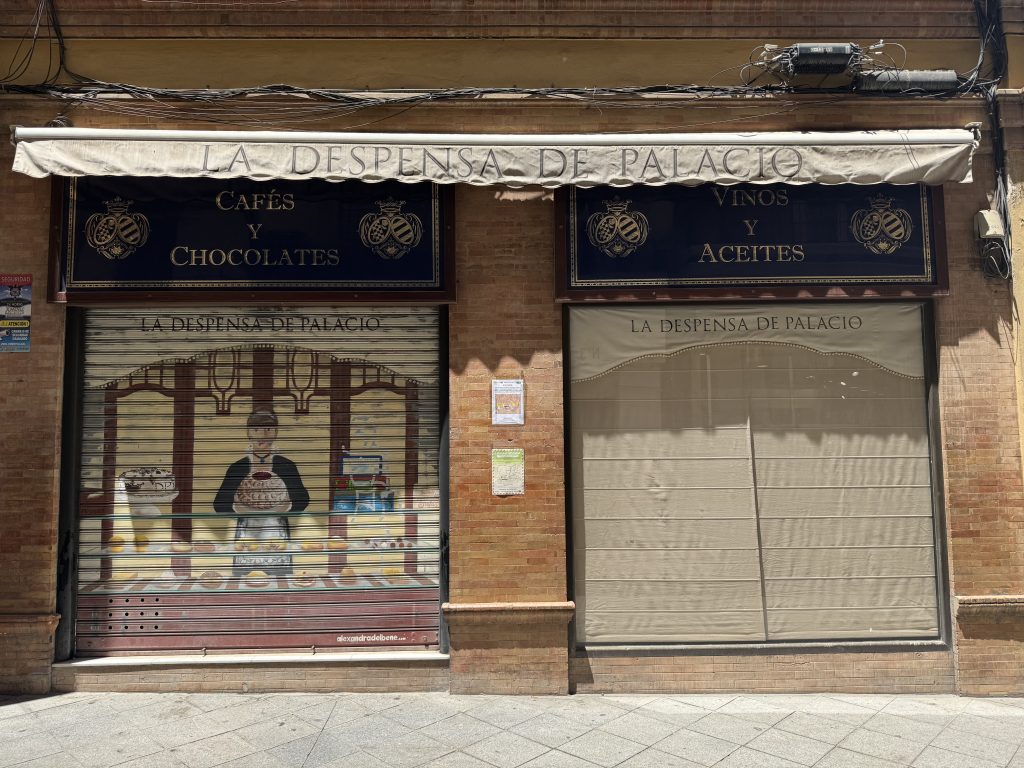
The siesta is alive and well. Many smaller shops and some restaurants close between 2 p.m. and 5 p.m. Museums and major attractions tend to stay open, but if you’re planning to pop into a pharmacy or buy that souvenir you had your eye on, check the hours first. You’d rather not hustle across town and realize you need to wait several hours before a place reopens.
Book the Alhambra before you book your flights. I’m only kinda kidding. Tickets sell out 6–8 weeks ahead in spring and autumn, and there’s no same-day availability. The Alhambra is time-slot ticketed, so you also need to be sure your travel dates align. I was lucky enough to be part of a tour with a wonderful guide who taught at the local university, and I’d recommend booking something similar.
Castillian is the language, but the accent is from another world. Andalusia doesn’t have a competing regional language, which means Castilian Spanish is it. In tourist areas, English is fine; in smaller towns and local bars, a few words of Spanish go a long way. Just don’t expect to understand people, even if you’re a B2 in Spanish. Seseo is a thing here, and people swallow so many letters that I still have to pay close attention. When I was a student, I heard an older lady yell into her cell phone, “¡E’tamo en el merca’o (estamos en el mercado)!” and that made me realize I still had a lot to learn about the Spanish language.
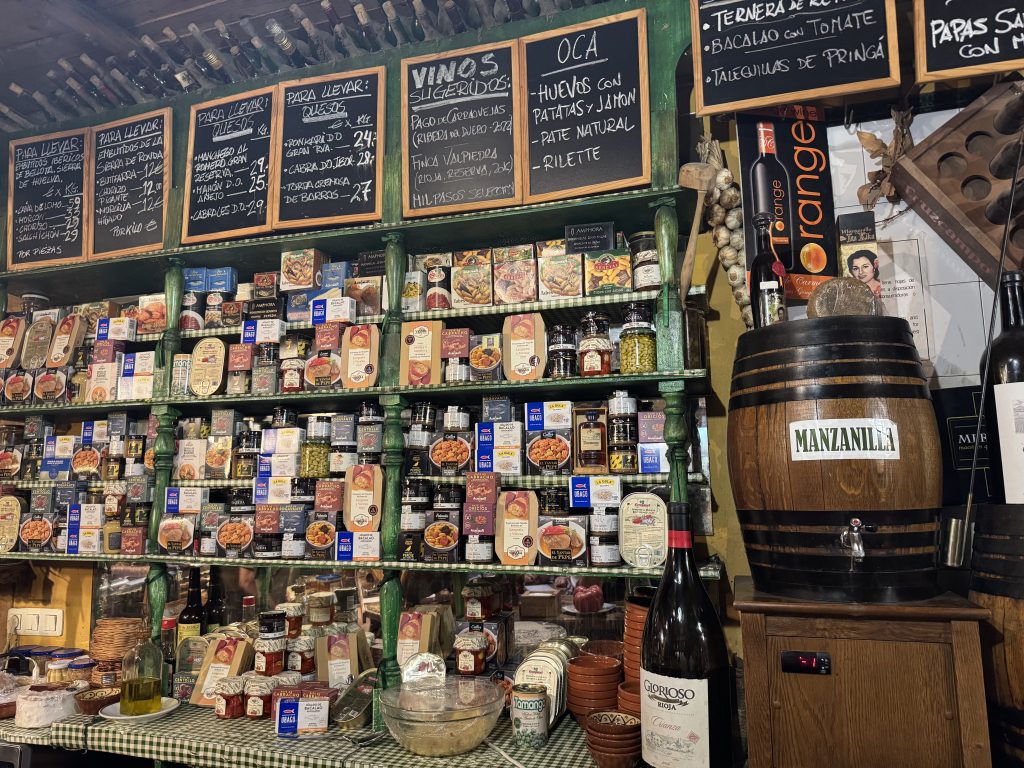
Tipping is not expected, but appreciated. Unlike the States, there’s no social obligation to tip in Spain. Rounding up the bill or leaving a euro or two is well-received; anything more will surprise people (and probably set a bad precedent).
Tapas are still free in Granada. Order a drink — beer, wine, tinto de verano — and a small plate of food comes with it at no extra charge. Not every bar does this (the ones catering to tourists have started charging), but the vast majority do. Budget accordingly: You can eat cheaply in Granada if you lean into tapeo.
Budget reality check. Andalusia is one of the more affordable parts of Spain. A mid-range hotel in Seville or Granada runs €80–€120 per night. Dinner at a good local restaurant — three courses with wine — is €25–€35 per person. Tourist-facing restaurants around major monuments charge significantly more. A rough daily budget for comfortable travel (not luxury, not backpacker) is €120–€150 per person including accommodation.
One Last Thing
Going slow is the way in Andalusia. Even within a 7-day trip, choosing to sit in a plaza for an hour to watch the city move around you, rather than sprinting to the next site, will be far more enjoyable than checking any number of sites off a list. Some of my fondest memories are from walking by a bar and stopping to have a vermouth just because.
The whole region rewards that attitude. The architecture is extraordinary, sure, but so is the way Sevillanas argue loudly with each other and then hug. The way flamenco in a small venue in Triana feels nothing like flamenco in a tablao. The way Granada smells like jasmine in the evening in May.
Plan carefully. Then leave room for parts you didn’t plan.
If all of this has you thinking about more than just a holiday — about actually living here — you might want to take a look at our guide to Spain’s Digital Nomad Visa. It’s more achievable than you think.
Frequently Asked Questions
How many days do you need in southern Spain?
A minimum of 7 days covers the main cities (Seville, Córdoba, Granada). 10 days is the sweet spot for most visitors, allowing you to add Ronda and a couple of days on the coast. 14 days is ideal if you want to include the white villages and take a slower approach.
What is the best time to visit Andalusia?
April, May, and October are the best months: Warm temperatures, manageable crowds and no extreme heat. Summer (July–August) is possible but demanding, Seville regularly hits 40°C. Avoid Semana Santa and Feria de Abril unless you’ve booked accommodation 6 months ahead.
Do you need a car in southern Spain?
Not for a 7-day itinerary covering only Seville, Córdoba, and Granada — the train connections are fast and reliable. For 10+ days that include Ronda, the white villages, or the Costa de la Luz, a car is strongly recommended.
Is southern Spain expensive?
By Western European standards, no. It’s more affordable than Madrid, Barcelona, or northern Spain. A comfortable mid-range daily budget is €120–€150 per person including accommodation. Granada is particularly good value thanks to the free tapas culture.
What is southern Spain known for?
Moorish architecture (the Alhambra, the Mezquita, the Alcázar), flamenco, sherry, jamón ibérico, olive oil, and some of the most dramatic natural landscapes in Europe. It’s also where the Spanish concept of the siesta and the late dinner are most faithfully observed.
How far is Seville from Granada?
Around 250km, or roughly 3 hours by road. By train, the fastest connection currently routes through Antequera and takes about 2.5 hours. There’s no direct high-speed train between the two cities — the scenic route by car or bus via Córdoba or Ronda is often preferable.
Affiliate disclosure: Some links in this article are affiliate links. If you book through them, I may earn a small commission at no extra cost to you. I only recommend things I’d genuinely use myself.